Dear Minister for Further and Higher Education James Lawless,
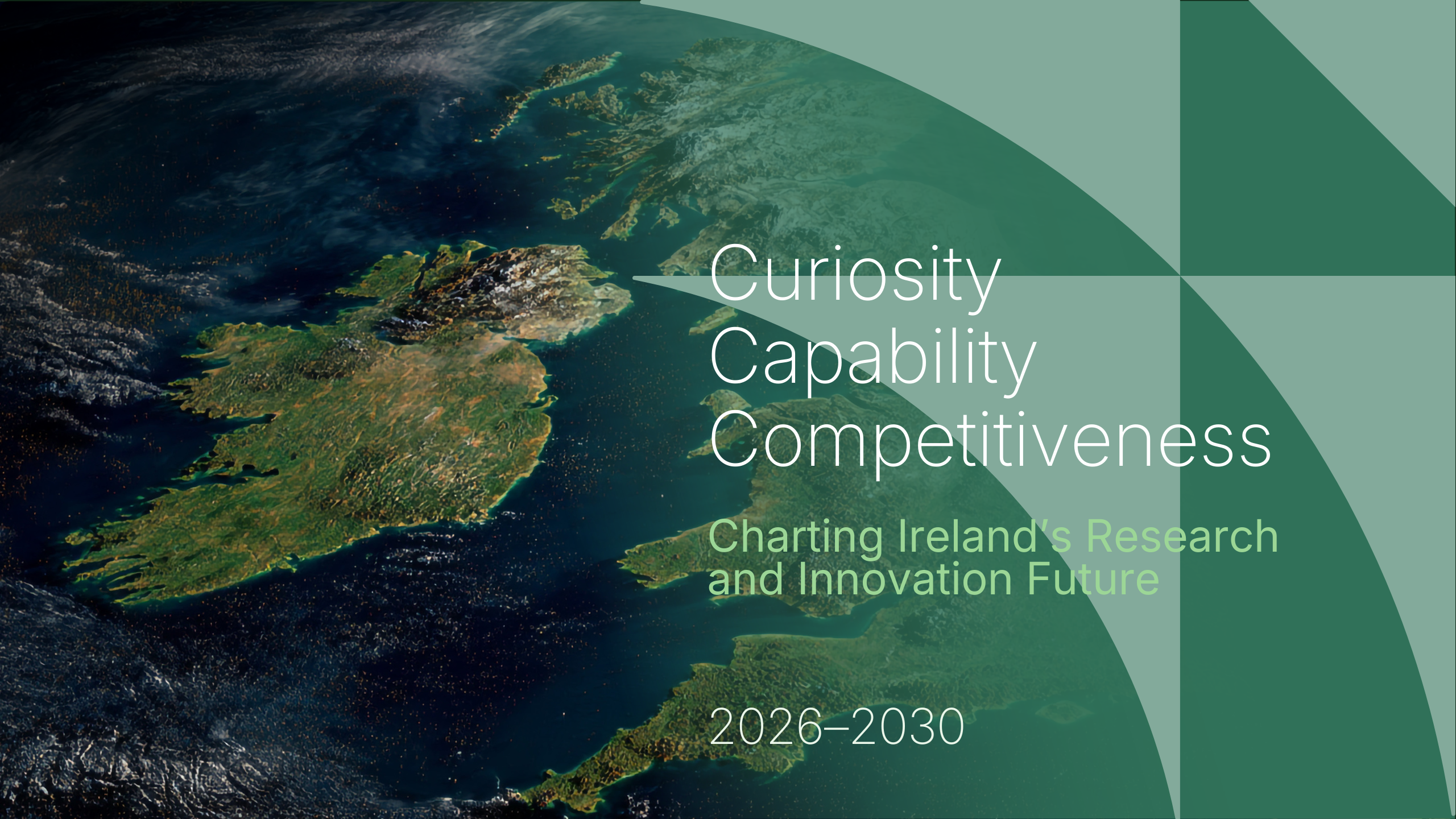
We, the undersigned, are writing to express deep concern about the priorities within Taighde Éireann - Research Ireland’s recently published 2026-2030 strategy and programme plan that will guide the distribution of over €4.55 billion in public funds over the next five years. The new strategy is structurally, rhetorically and materially focused on commercially translatable research and economic impact rather than supporting bedrock, fundamental, discovery research and research for the public good. The disproportionate focus on industry interests instead of discovery research and the public interest marginalises the Arts, Humanities and Social Sciences (AHSS) and the fundamental sciences, and minimises research for social good and research that is truly innovative and ground-breaking.
Despite a 2023 letter signed by over 2,500 scientists calling for balance between STEM (Science, Technology, Engineering and Mathematics) and AHSS (Arts, Humanities, Social Science) in Ireland's research funding which was sent to then Minister Simon Harris, this new strategy is an assault on Ireland’s research ecosystem. The imbalance in funding weakens academic freedom and its strong private-sector bias is a threat to democratic processes.
We are particularly concerned about:
(1) The lack of participatory process and the absence of evidence-based decision-making in developing the strategy. Research Ireland failed to engage in a meaningful way with a broad range of key constituents within Ireland’s research community in developing and refining the new strategy. While there were events characterised as consultation, it is clear that Research Ireland has not heard or listened to the voices of active researchers across the disciplines they are legally required to serve. The strategy also ignores all the international evidence that shows a balanced research funding ecosystem is vital to produce the best fundamental and translational (applied) research. The lack of a truly participatory process is not only an attack on academic freedom but it is an attack on democracy itself.
(2) The industry-centred, commercially-focused, profit-seeking priorities of the research strategy marginalises Arts, Humanities and Social Science (AHSS) and fundamental science and minimises the value of curiosity-driven research. Addressing societal challenges and making fundamental scientific breakthroughs requires both translational (applied) research and discovery research.
(3) The dismantling of the current PhD scholarship and post-doctoral fellowship programmes. The proposed restructuring requiring higher education institutions to distribute PhD scholarship and post-doctoral fellowship funds internally has multiple negative effects: (a) It undermines the notion of funding excellence in ideas and people regardless of discipline or institution by concentrating awards into institutional priorities. Concentrating research in areas deemed strategically important will have an effect of stifling innovation in the long term; (b) It undermines truly independent, impartial, international, fair and comparable review across all institutions by placing the review process in institutional hands. Given the institutionally-based allocation of funds on past performance, it will exacerbate and reinforce disparities within and among institutions. Moreover, the translational aspect will further marginalise AHSS and fundamental scientific research; (c) Removing the prestigious centralised scholarships/fellowships removes the external signal of excellence and reputation that attracts high-calibre researchers. This essentially dismantles the excellent programmes that were offered by the Irish Research Council and weakens Ireland’s research capacity. During the pre-legislative scrutiny and legislative processes, the research community and Government were explicitly told this would not happen.
We ask the Minister of Further and Higher Education to urgently intervene and reclaim the public-good mission of Ireland’s research agency. We call on Research Ireland to:
(i) Reverse the decision to dismantle the centralised national model of funding for PhD scholarships and post-doc fellowships;
(ii) Recommit to curiosity-driven, principal-investigator-led research instead of prioritising industry-led research. Ireland’s research ecosystem must include support for fundamental inquiry across all disciplines, not as a gesture, but as a structural priority.
(iii) Remove the requirement that non-applied research must demonstrate its future economic utility to qualify for funding.
(iv) Establish an Irish Research Council as a subcommittee of the Board of Research Ireland as promised during the development of the legislation and provided for in Section 19(2)(b) of the Research and Innovation Act 2024.
(v) Prioritise research for the public good. Ireland faces profound societal challenges that commercialised, profit-oriented research cannot address. During this time of societal upheaval, it is irresponsible to promote profit-oriented research that can add to destructive social and environmental processes, while undermining research that helps to understand the challenges facing Irish society. Research on economic inequities, democratic participation, mental health, housing injustices, climate justice, education, and the full range of human experiences and societal processes must be valued on its own terms, not subordinated to industry-led agendas or quantified through economic metrics.
(vi) Include social scientists, non-commercially-oriented researchers, as well as senior leadership of Irish higher education institutions, in all future strategy development and in the governance of Research Ireland. The current strategy must be reopened for genuine co-design with Ireland's research community, including those whose disciplines are most marginalised by its current framing. Open discussion must be respected without fear of retaliation or retribution. Critical voices must be welcomed and protected in line with the principles of academic freedom. Participatory co-design must be embedded in future strategy cycles as a non-negotiable requirement.
(vii) Establish a Social Sciences, Humanities and Community Research Fund with ring-fenced, recurring investment. This fund should be governed with active input from discipline representatives and civil society, and explicitly designed to support research that may not produce a commercial output but will enrich Irish public life, policy, and democratic culture.
(viii) Demonstrate that evidence-based and participatory policy is embedded in Research Ireland's own governance. Research Ireland must include and give equal weight to input from scholars across all domains into its strategic decision-making. As a public body and steward of public funds, Research Ireland must publish clear and transparent accounts of how its strategic decisions are made, what evidence is used, whose voices are included, and how conflicts of interest with corporate and enterprise partners are managed. Research Ireland must openly acknowledge the societal risks of harmful corporate interference in research and must prevent corporate capture of Ireland’s public research ecosystem.
We respectfully request a response at your earliest convenience.
Update: Open Letter on Research Ireland
Thanks to the 2660+ signatories of this Open Letter to Minister Lawless expressing concern about Research Ireland/Taighde Éireann’s strategy. This Open Letter has catalysed a broad coalition of individuals and organisations that are deeply concerned about the future of research in Ireland. Since the Open Letter was published, there have been several developments, summarised below.
27 May 2026 – Open Letter published. Over 1000 individuals signed the letter within the first day.
8 June 2026 – Research Ireland/Taighde Éireann issued a statement responding to the Open Letter. While the willingness to engage is appreciated, the Statement did not address the core concerns of the Open Letter and did not acknowledge the most urgent request of the Open Letter: (i) to reverse their decision to dismantle the Government of Ireland PhD scholarship and post-doctoral fellowship programmes. The statement https://www.researchireland.ie/news/statement/
24 June 2026 - Minister Lawless met with a delegation of representatives of the Open Letter. During this meeting, representatives from Research Ireland/Taighde Éireann were also present. The focus of the meeting was on the two most urgent concerns: (1) the devolution of the 2026 Government of Ireland Postgraduate and Postdoctoral Awards, and (2) the lack of engagement and consultation with the research community. The Minister indicated his commitment to further dialogue but no issues were resolved. He encouraged Research Ireland/Taighde Éireann to do more direct consultation with the research community.
Early July 2026 – Research Ireland/Taighde Éireann representatives held a series of meetings with individual researchers and representatives of multiple constituent groups (including RIA, IFUT, SIPTU, IRSA, PWO, CJUU, etc) who reiterated concerns raised in the Open Letter emphasising the lack of sectoral consultation. The focus of these meetings was the request to pause for a year the devolution of the 2026 Government of Ireland Postgraduate and Postdoctoral Awards to allow for a full review and a meaningful consultation process.
23 July 2026 – Research Ireland/Taighde Éireann held an invite-only online roundtable in which they presented plans for a new EMPOWER programme which they intend will replace the current Government of Ireland PhD scholarships and post-doctoral fellowship programmes. The audience of this event was highly selective consisting of Vice Presidents of Research and Innovation, Deans, and some signatories of the Open Letter. Participation in this event was limited, and the format was more of a briefing than a consultation.
At this point, Research Ireland/Taighde Éireann appear to be moving ahead with dismantling the Government of Ireland scholarships and fellowships and replacing them with a program where the funds would be given to individual higher education institutions to disperse based on their strategic plan and national priorities. This is a major structural change that will have long-term implications for the future of research in Ireland.
There have now been multiple requests for structured, sectoral engagement, as envisaged in the Research and Innovation Act 2024 and as aligned with commitments made by government nationally and internationally to engage and consult prior to introducing changes. This type of engagement takes time so it would require a pause of the new proposed programme and for Research Ireland to administer the Government of Ireland scholarships and fellowships in 2026-2027.
Given the current situation, we encourage all supporters to intensify their efforts in advocating for a pause to the devolution of the 2026 Government of Ireland Postgraduate and Postdoctoral Awards to allow for a full review and a meaningful structured and inclusive sectoral engagement with the Irish research community.
The Open Letter has, so far, been supported by:
-
Leading academics and researchers from all disciplines and career stages
-
Irish Federation of University Teachers (IFUT) – see IFUT statement here ifut.ie/content/research-ireland-open-letter...
-
Irish Research Staff Association (IRSA)
-
Postgraduate Workers Organisation (PWO)
-
The Union of Students in Ireland / Aontas na Mac Léinn in Éirinn (AMLÉ)
-
Irish Humanities Alliance / Comhaontas Daonnachtaí na hÉireann (IHA) - hosted by the Royal Irish Academy (RIA)
-
Climate Justice Universities Union (CJUU)
-
Fellows of Trinity College Dublin – see letter to The Irish Times
irishtimes.com/opinion/letters/2026/06/24/proposed...
-
Centre for Cultures, Academic Values in Education (CAVE) at Trinity College Dublin
-
Green Party
-
Concerned members of the public
We encourage all supporters to take the following steps:
-
Write directly to the Minister, TDs and Senators to ask for an intervention to pause this change – Find contact information here. https://www.contactyourtd.ie/
-
Engage with senior university administrators expressing these concerns.
-
Continue to encourage additional signatories to the Open Letter.
-
Raise these issues within, across, and beyond academic institutions.
-
Mobilise public support.
-
Increase visibility of the concerns via the media and social media.
A new Coalition for the Future of Research in Ireland is being formed to expand coordination and communication on these urgent issues and the broader issues raised in the Open Letter.
Open Forum on the Future of the Irish Research Landscape
UPDATE AND INVITATION
UPDATE: Over 2300 have signed the open letter demonstrating broad concern, yet a meeting with the minister to discuss these issues with a coalition of concerned members of the research community has not yet been granted.
INVITATION Have your say: Forum on the Future of the Irish Research Landscape: A Response to the Research Ireland Work Plan
June 10th Wednesday 2-3:30pm Davis Theatre Trinity College Dublin with virtual access - hybrid event.
Speakers includes delegates from CAVE, CJUU, IRSA, IFUT, PWO and AMLÉ. Followed by open discussion.
REGISTER HERE
- Jennie Stephens, Professor, Maynooth University, Dublin
- Jane Ohlmeyer, Professor, Trinity College Dublin, Dublin
- Claire Connolly, Professor of Modern English, University College Cork, Cork
- Marcus Collier, Researcher, Trinity College Dublin, Dublin
- Declan O'Sullivan, Professor, Trinity College Dublin, Dublin
- Madeleine Steeds, Assistant Professor, University College Dublin, Dublin
- Abeba Birhane, Assistant Prof of AI, TCD, Dublin
- Jeremy Auerbach, Assistant Professor, University College Dublin, Dublin
- Owen Conlan, Professor, Trinity College Dublin, Dublin
- Kathleen James-Chakraoborty, Professor of Art History, Univesity College Dublin, Dublin
- Keith A. Wilson, Assistant Professor, University College Dublin, Dublin
- Nessa Cronin, Assistant Professor, University of Galway, Galway, Galway
- Helena McCann, School Manager, UCD, Dublin
- Porscha Fermanis, Professor, University College Dublin, Dublin
- Kylie Jarrett, Professor, University College Dublin, Dublin
- Anna Hickey-Moody, Professor, Maynooth University, Kildare
- Turlough Downes, Professor, Dublin City University, Dublin
- Clare Kelly, Associate Professor, Trinity College Dublin, Dublin
- Yianna Liatsos, Associate Professor, University of Limerick, Limerick
- Anthony Kelly, Teaching Fellow, University College Dublin, Dublin
2,485 more
verified signatures
- Dáithí Downey BA, PhD, FRGS, Public Servant, Dublin City Council, Dublin
- Marnie Holborow, Retired lecturer, Dublin City University, Dublin
- Louise Mallinder, Professor of Law, Queen's University Belfast, Belfast
- Maria Rönnby, PhD student, Trinity College Dublin, Dublin
- Hannah Conroy Broderick, Teaching Fellow & Former IRC Postdoctoral Fellow, University of Leicester, Leicester, UK
- Larissa Vilhena, Lecturer, NCAD, Dublin
- Brian Schulz, Project Manager, TCD, Dublin
- Jennifer Ahern, Anthropologist/Artist, University College Cork, Cork
- Veronica Peverelli, Postdoctoral research fellow, Trinity College Dublin, Dublin
- Andrew Gibson, Assistant Professor, Trinity College Dublin, Dublin
- Gary McGuire, Professor, University College Dublin, Dublin
- Manuel Bruch, Postdoctoral Researcher, UCD, Dublin
- Collette McEntee, Kilmainham
- Anastasia Gorbunova, Postdoctoral researcher, University College Dublin, Dublin
- Jack Murray, Lecturer, University College Cork, Cork
- Ebru Isikli, Postdoc, University College Dublin, Dublin
- Aleksandar Kostić, Lecturer, South East Technological University, Waterford
- Ziqi Zheng, PhD student, Trinity College Dublin, Dublin
- Susie Donnelly, Researcher, Susie Donnelly Research (SDR), Independent Research Consultant, Dublin
- Chenqing Zhang, PhD candidate, Technological University Dublin, Dublin
and sign it together